Home › Slab Leak Signs
Slab leak signs — and the two-hour test that settles it
Most slab leaks are noticed as something else first: a water bill that crept up, a warm patch on the floor, a crack over a door. Here is how to tell.
Most slab leaks are noticed as something else first: a water bill that crept up, a warm patch on the floor, a crack over a door. Here is how to tell.
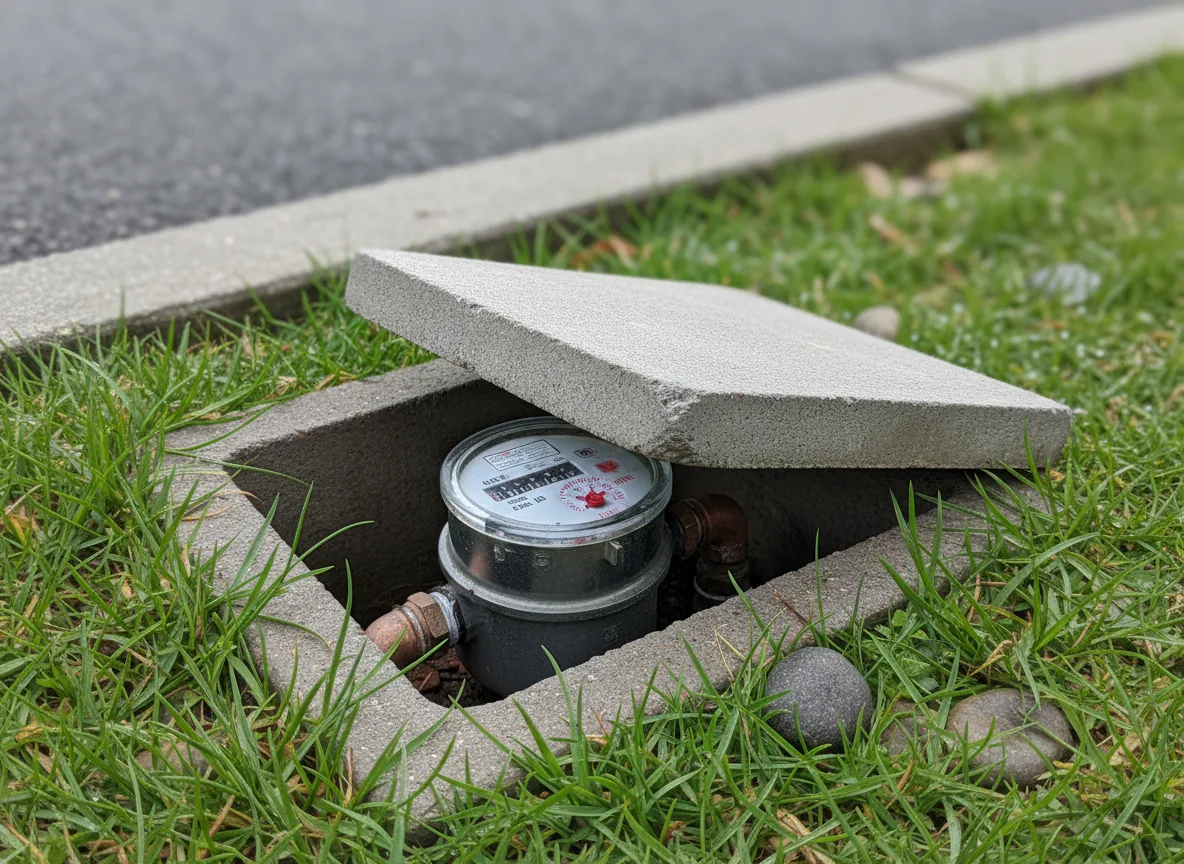
Turn off every tap, appliance, ice maker and irrigation zone. Find the meter at the street and note the position of the small sweep hand, or the leak indicator — a small triangle or dial that turns with even tiny flow. Wait two hours with everything still off, then look again. Movement with nothing running means water is escaping between the meter and the fixtures. It does not prove the leak is under the slab, but it proves there is one, and it is the most useful single fact you can give a plumber.
The most distinctive sign there is, and it only occurs with a hot water line. Hot water lines fail under slabs more often than cold ones — they expand and contract with every use and that cycling abrades the pipe where it bears on the concrete.
Stand in a quiet house at night with all water off and listen near the floor. A continuous hiss or rush you cannot account for is worth taking seriously.
A crack appearing over a door frame, a door that has started to stick, or a hairline crack running across a floor tile. These are the signs that mean the leak has already started moving the soil, and the point at which the cost stops being a plumbing bill.
Often the earliest signal and the easiest to explain away. Compare against the same month last year rather than against last month — Texas irrigation makes month-to-month comparison useless.
Easily, and it is worth ruling out first. Close the irrigation shutoff specifically and repeat the meter test. If the meter stops moving, the leak is in the irrigation, which is a much cheaper problem.
Faster than the water loss alone suggests. The soil movement under the slab is the expensive consequence and it compounds the longer the leak runs.
No. Mineral deposits sometimes slow one temporarily, which is why a leak can appear to stop and then return worse.
Send the details and we'll route it to a licensed local contractor.